


Cantina Orsogna 1964 is a very distinctive winery. A cooperative cellar, like many others in the province of Chieti, it was founded in 1964 in the charming village of Orsogna as an olive oil and wine cooperative.
Today the Cantina focuses almost entirely on wine production, counting around 600 members across more than 1,200 hectares of vineyards, with a total of approximately 1.7 million bottles produced, not counting bulk wine. Wine at Wine has covered Cantina Orsogna before: today we return to tell the story of a very special wine – the Passerina Vola Volè.
The first thing that makes Cantina Orsogna unique on the national scene is that over 85% of this vast vineyard heritage is certified organic or biodynamic. The hectares managed under biodynamic practices total approximately 300 (with over fifty more in conversion), a fact that makes Cantina Orsogna the largest Italian operation in the production of these types of wine, and one of the biggest players worldwide. Impressive numbers, born from a strategic decision made about twenty years ago to firmly commit to a healthier, more environmentally respectful agriculture for people and land alike. An ethical yet forward-looking choice that, over time, has also found commercial resonance in international markets.
The Cantina and a large portion of the vineyards lie at the foot of the Majella massif, 15 km as the crow flies from the Adriatic Sea – a fortunate position that allows the vines to benefit from constant winds and breezes. The vineyards are farmed on hillsides at altitudes ranging from 380 to 580 metres above sea level, on land with a fairly varied composition, though the most significant portion is calcareous-clay or calcareous-sandy in nature. The commitment to nature also translates into an eco-sustainability project that has led to the complete elimination of plastic materials, including capsules on bottles across all organic and biodynamic wines.
Wine production is divided into 4 lines: two biodynamic lines certified by Demeter International and two that are "merely" organic. The first, Zeropuro, requires that the wines contain no added sulphites and remain unfiltered. The second line, also Demeter-certified, is called Lunaria: in this case, fining, filtration and the addition of sulphites are permitted, while still remaining within the biodynamic framework. The third is the Vola Volè line (comprising Pecorino, Trebbiano, Passerina, Cococciola, Cerasuolo and Montepulciano) and is born from a study on bee behaviour and where yeasts live during the winter months. The last is an entry level line. Every wine from the Cantina has its own distinct character, but is always conceived to showcase the potential of the grape variety used.
The wine we are discussing today, the Passerina from the Vola Volè line, is an organic wine with Biodiversity Friend certification. This certification guarantees biodiversity in agriculture through biological indices and the application of techniques designed to raise the quality of ecosystems. The manual harvest takes place in mid-September, when the grapes have an acidity level that ensures the necessary freshness in the wine. The yeasts used for fermentation are extracted from pollen processed by bees and come from hives placed near native plants of the territory (chestnut, blackberry bramble, sulla). The bee is a natural bioindicator – it signals immediately through its behaviour whether an ecosystem is polluted or not. It collects nectar from flowers and, to preserve it, uses lactic ferments and yeasts, a practice a million years old. The yeasts selected in this way are then reproduced in a laboratory to create wines that use native yeasts, as in the case of the Passerina we are describing. Alcoholic fermentation is carried out at controlled temperature, and the subsequent ageing on the lees imparts complex and significant depth to the wine.
We now turn to the tasting notes.
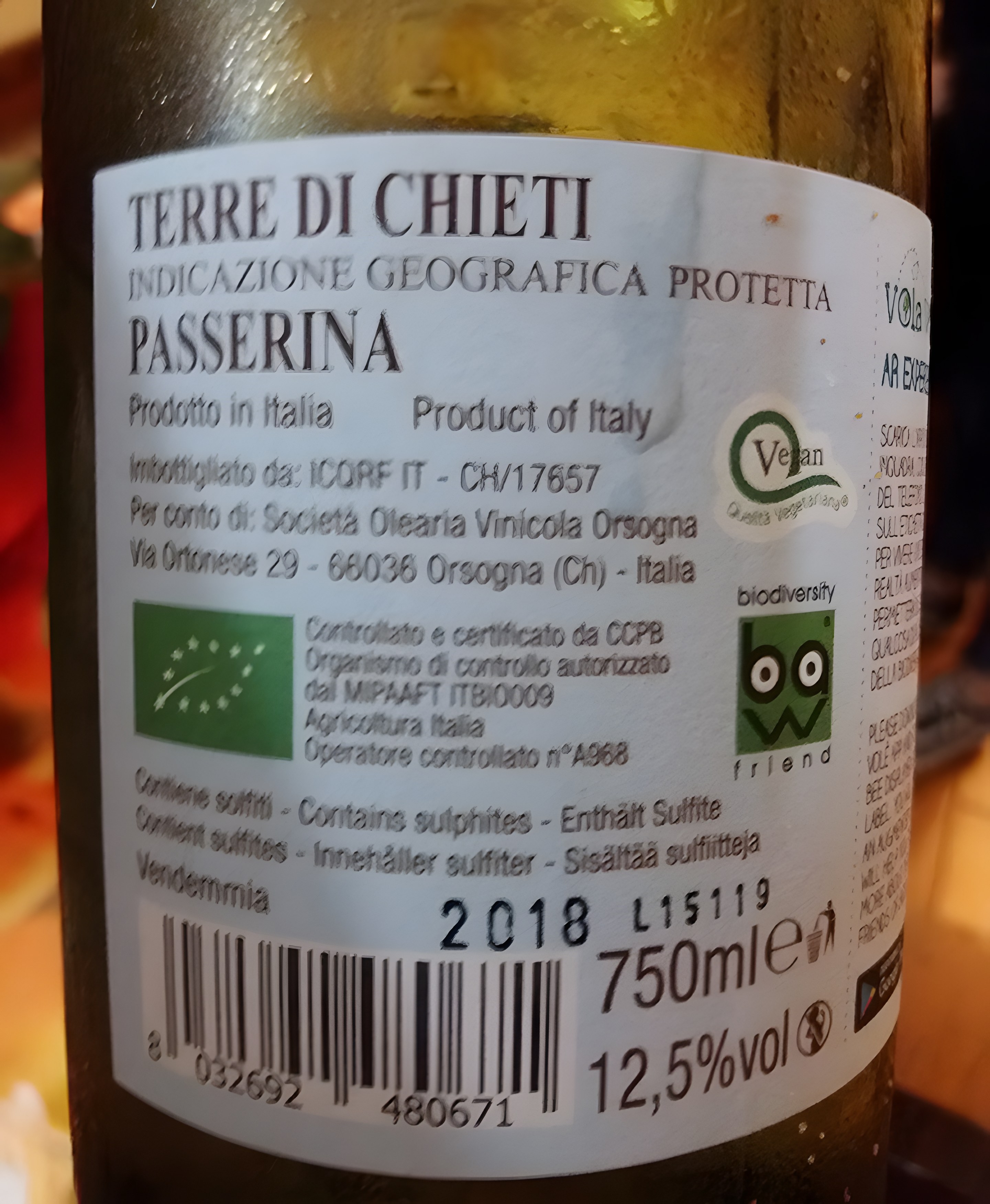
Passerina Vola Volè 2018
In the glass, the wine shows a deep straw yellow colour with greenish glints. The aromatic profile is truly unexpected. We immediately detect an explosion of floral notes – acacia, orange blossom, mimosa – followed by fruit, above all pineapple and then yellow peach. We then perceive herbaceous aromas, including honeysuckle and thyme, with a dusting of white pepper and a lovely mineral finish. The generous nose is matched by a truly impressive palate. The fresh, savoury thrust – which hints at an interesting evolution over time – is balanced by a non-intrusive alcohol and a great softness that makes it particularly well-balanced. The finish is long, returning to mineral and citrus tones.
A surprising wine, highly pleasurable and versatile at the table – it pairs well not only with seafood preparations, but also with pasta dishes and medium-aged cheeses.


What do you think?
Log in to leave a comment