
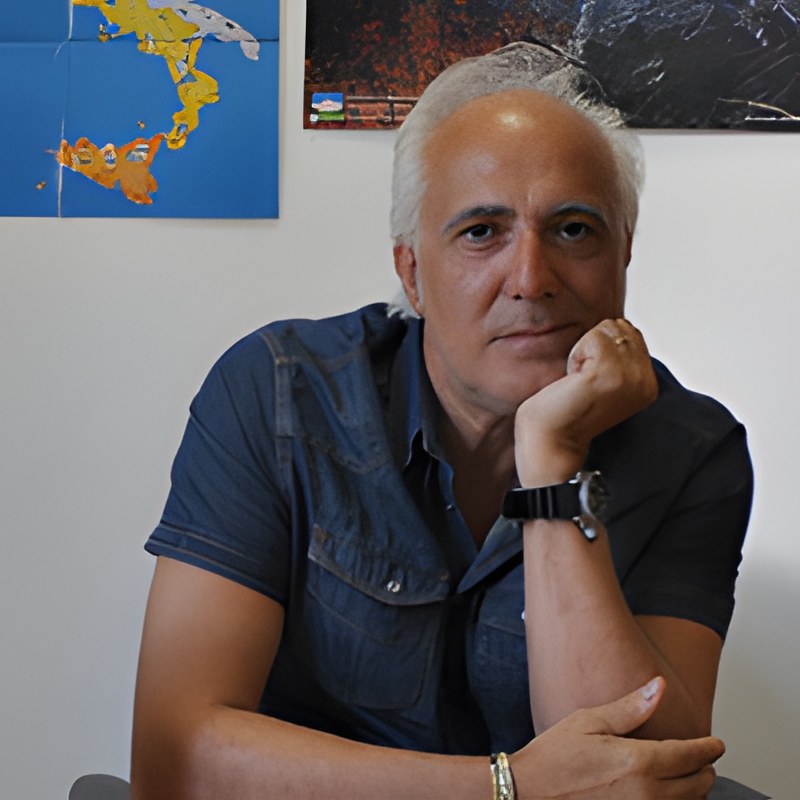

I first encountered Picariello's Fiano in 2005 when I was approached at the wine shop where I worked in Mentana (Rome) by a woman who told me about Ciro. She was (and still is) the sister of Picariello's wife, and she wanted me to try a case of six bottles of this Fiano I had never heard of.
She told me that her brother-in-law, tired of delivering his grapes to Feudi di San Gregorio, wanted to go independent and was looking for a foothold in Lazio to promote his product.
We organized a tasting and I appreciated this little masterpiece right away during a pleasant evening – the only flaw being that two bottles out of six smelled of cork taint. I spoke with Ciro by phone, congratulating him on the wines and strongly advising him to pay closer attention to cork selection in the future.
From the 7 hectares in Summonte, in the province of Avellino, 5 are dedicated to Fiano trained to guyot with a planting density of 3,000 vines per hectare, situated at 650 metres above sea level – among the highest elevations in the Avellinese. It was a bold choice to delay the release of this wine by one year, in order to give the product greater complexity and test its aging potential. I recently opened a 2010 Fiano. Splendid – in its golden robe with greenish reflections, it opens on the nose quickly and captivatingly, with a light smoky touch, aromatic herbs, and hints of menthol. On the palate it is full-structured, where the alcoholic tone is tempered by a vigorous acidity, closing with a pleasant bitter almond note. A complex wine, considering it sees only stainless steel for a year before bottle aging. Be patient – there's no rush to drink it; leave it to rest for a few years in a cool place. It will reward your wait.
Ciro's Fiano has come a long way. I encountered it again a few years ago at the grand finale at the Hilton in Rome, competing for recognition in the AIS guide as the best-value Italian white wine in terms of quality/price ratio.
I am glad to have discovered, before many others, this Campanian Vignaiolo who with humility and hard work promotes a deep attachment to his roots and to the historic native varieties of his terroir – without compromise or shortcuts. A perfect match with raw Astice and Mazzancolle, excellent with spaghetti a vongole and coniglio alla cacciatora.


What do you think?
Log in to leave a comment